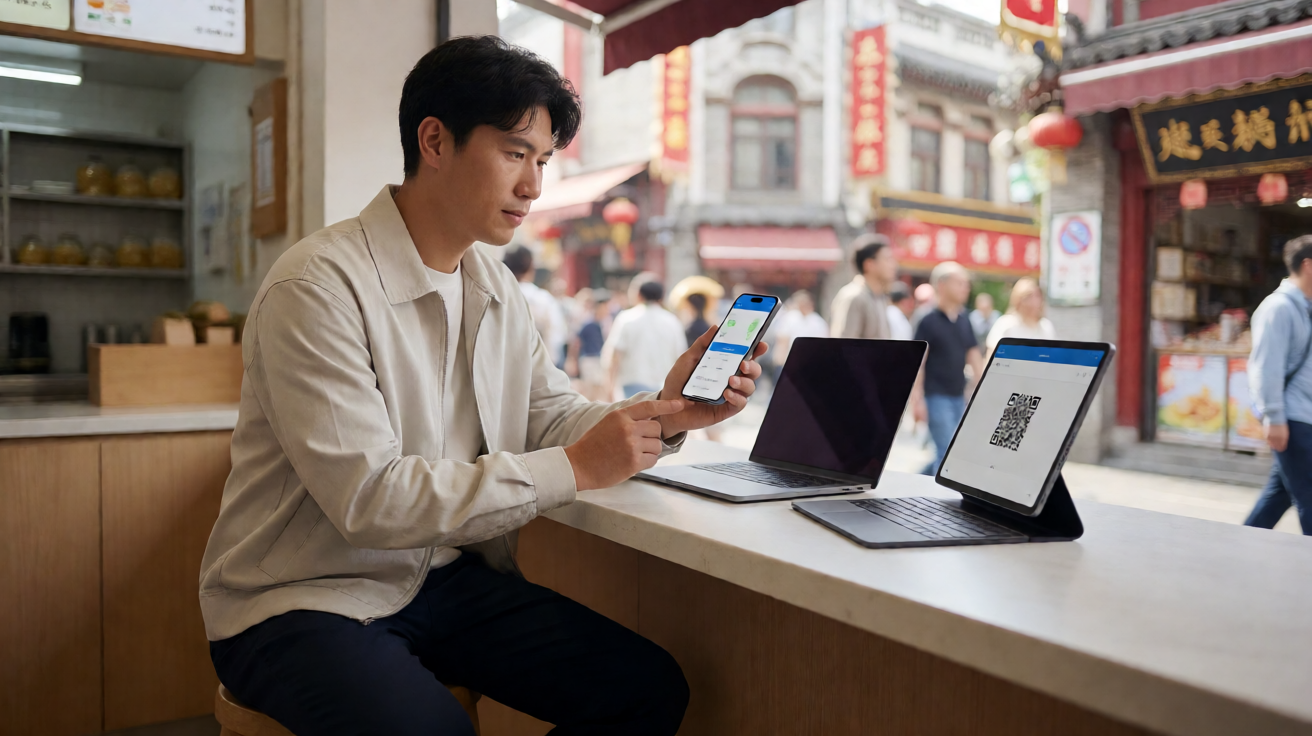
An eSIM is a way to install a mobile plan; it does not automatically tell you what the plan includes. Two China eSIMs with the same data allowance can differ on phone numbers, SMS, hotspot sharing, roaming route, activation timing and app support. Read the plan’s included features before paying, not after landing.
Does a China eSIM give you a phone number?
Many travel eSIMs are data-only. That can be perfect for maps, ride-hailing, browser-based bookings and mobile-payment apps, but it may not support ordinary calls or SMS to a local number. Other plans may include a number, SMS or voice allowance, but the country code and capability depend on the specific provider and plan.
Before buying, look for explicit answers to these questions on the plan page:
- Is the plan data-only, or does it include a number?
- Can it receive standard SMS and make or receive calls?
- Is any number local to mainland China, or from another jurisdiction?
- Can it be used for identity codes, and does the relevant service accept that number type?
Never buy an eSIM solely because a listing says “China coverage” if you need a phone number. Coverage and telephone capability are separate features.
SMS: useful, but do not assume it is included
Some travelers only need data because their everyday services use app messages, email or authenticator apps. Others need SMS for account recovery, a bank alert or a booking confirmation. If an incoming code is critical, keep your usual SIM active where your phone supports dual SIM, confirm roaming and SMS charges with your home carrier, and update account recovery methods before leaving.
Do not depend on a travel eSIM for a one-time verification code unless the provider clearly confirms that feature and the receiving service accepts it. Put recovery codes and trusted-contact details somewhere secure and accessible offline.
Can you share data by hotspot?
Hotspot or tethering is often the difference between a convenient plan and an expensive one. A plan may permit personal hotspot use, restrict it, limit its speed, or apply a separate fair-use rule. Your phone can also have a device-level setting that affects sharing.
Check these items before purchase:
- Does the plan specifically permit hotspot or tethering?
- Is there a separate hotspot cap or speed limit?
- Can your phone use the eSIM as the mobile-data line while sharing?
- Will your laptop, tablet or travel companion need the connection?
Test a hotspot at home after installation if your provider permits activation before travel. Bring a charging cable or power bank: hotspot use can drain a phone much faster than ordinary browsing.
Will a data-only eSIM work with Alipay and WeChat?
Mobile data can help you use Alipay and WeChat, but an eSIM itself does not create a payment account, verify a bank card or guarantee that a payment will be accepted. Those are separate payment-product and issuer decisions.
China’s official visitor guide says foreigners can register Alipay, WeChat or UnionPay apps with foreign or Chinese phone numbers, then follow the in-app steps to bind a bank card. It lists Visa, Mastercard, UnionPay, American Express, JCB, Diners Club and Discover among supported card brands, while noting that card binding must be verified by the issuer and limits or charges vary by payment product. Read the official guide.
In practice, set up payment apps and test the card-binding process before travel where possible. Carry a physical bank card and some lawful payment backup, because an eSIM cannot solve a declined card, an identity-review step or a temporary app issue.
A feature checklist for choosing a plan
| Feature | What to verify |
|---|---|
| Data | Allowance, validity period, speed policy and top-up options. |
| Phone number | Whether one is included and which country code it uses. |
| SMS and calls | Incoming/outgoing capability, not merely data messaging. |
| Hotspot | Permission, separate cap and device compatibility. |
| Activation | Whether you install now, activate on arrival, or both. |
| Payments | eSIM data helps connectivity, but card binding and verification are separate. |
Save the plan’s terms, activation instructions and support link before departure. That is far more useful than guessing from a marketing icon after you have lost Wi-Fi access.
Research questions before you buy
Reader perspective
- Do I need only mobile data, or must I receive calls and SMS too?
- Will I share data with a laptop, tablet or travel companion?
- Which phone line will receive critical account-recovery codes?
- Have I installed payment apps and kept a non-app backup for purchases?
SEO / People Also Ask perspective
- Does a China eSIM include a phone number?
- Can a China eSIM receive SMS verification codes?
- Can I use hotspot or tethering with a China eSIM?
- Will Alipay and WeChat work with a data-only eSIM?
Competitor-gap perspective
- Is the plan’s number and SMS capability written explicitly, rather than implied by “coverage”?
- Does the provider place a separate cap or speed rule on hotspot traffic?
- What payment or recovery step still depends on my bank, home SIM or identity verification?
Bottom line
Choose a China eSIM for the features you need, not just the data total. Data-only plans can be excellent for many visitors, but phone numbers, SMS and hotspots must be confirmed plan by plan. Prepare payment apps and recovery options separately so that your connectivity plan supports the whole trip.