Start with the option that works in your city
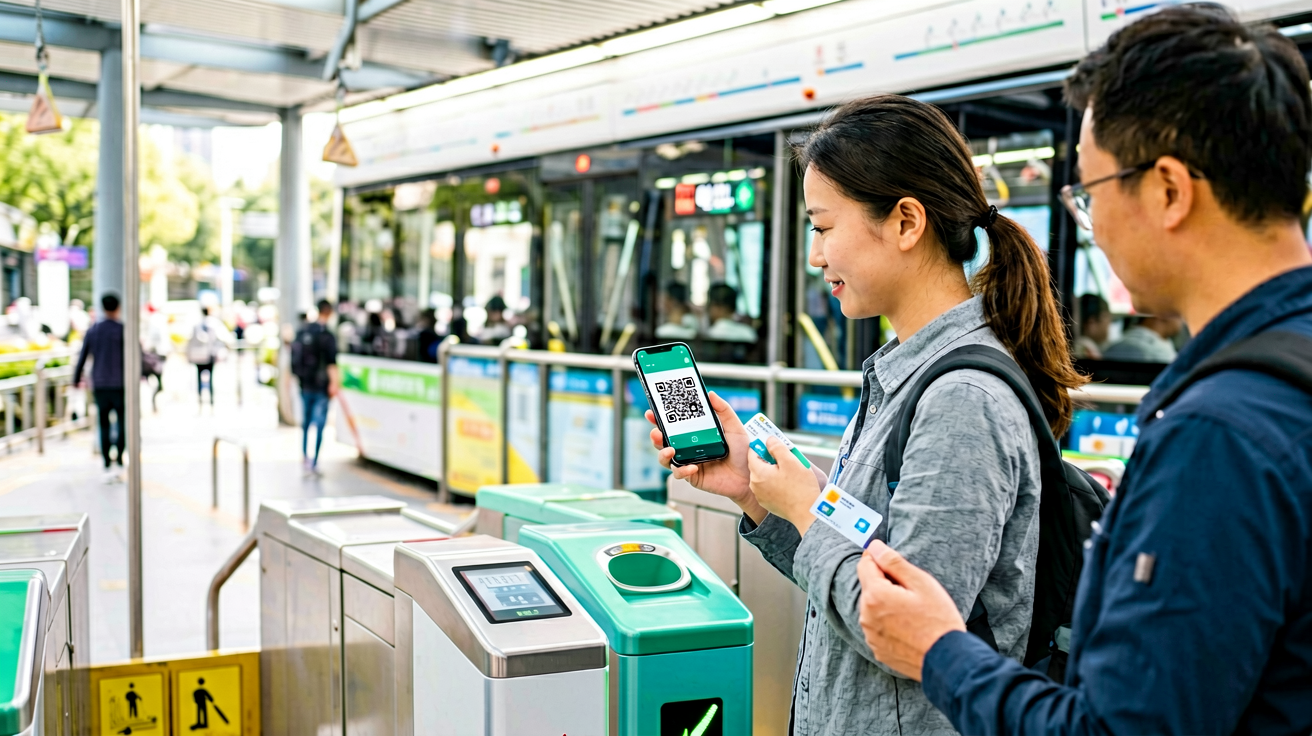
China does not have one nationwide metro or bus payment method. Your choices can include a single-ride ticket, a local transit card, a mobile QR code, or tap-to-ride with an overseas bank card. Check the station signs and the operator’s instructions after arrival; those beat an old travel blog.
The 2026 official visitor guide says foreign travelers can buy metro tickets or passes at stations, pay with Chinese or foreign bank cards, RMB cash, or mobile payment apps, and use QR codes where the app and city support them. It also says tap-to-ride with overseas-issued cards is available on metro systems in Beijing, Shanghai, Guangzhou, and Chengdu, with local exceptions and participating lines.
The easiest fallback: a single-ride ticket
For a first journey, a ticket window or self-service machine is often the least stressful option. Keep a small amount of RMB and a card available, because each station’s machine, language support, and accepted payment methods can differ. For frequent travel, ask at the ticket office about a local metro pass; the official guide says passport presentation may be required.
Do not assume a bus will give change. Official guidance recommends small notes for bus cash payments. If you cannot confirm a QR code or card reader works, ask the driver or station staff before boarding.
Using an Alipay transport QR code
In cities that support it, open Alipay, choose Transport, select the city, and complete any identity verification request. The app can then display a metro or bus QR code. Scan it at the gate when entering and exiting the metro; for buses, follow the local scan instructions, which may require scanning when boarding and alighting.
QR access is a separate setup process from simply linking a foreign card. Complete it over reliable internet before rush hour. If it requests a phone number, identity step, or card authorization you cannot finish, switch to a ticket, transit card, or supported contactless bank card rather than blocking a gate.
Tap-to-ride with an overseas card
The current official guide identifies contactless access for overseas cards on urban metro systems in Beijing, Shanghai, Guangzhou, and Chengdu, plus Beijing’s S2 and Shanghai’s maglev and urban lines. It names UnionPay, Visa, Mastercard, and American Express as accepted card networks for that service. Coverage can be line-specific, so check signage at the exact gate.
Use one card consistently for entry and exit. Keep it separate from other contactless cards so the right card is charged. Review your issuer’s exchange rate and foreign-transaction fees before relying on this method for every ride.
Buses: plan for more variation
Bus payment rules vary more than metro rules. The government guide lists RMB cash, bus cards, and Alipay as visitor options, but a particular route may use a local QR program or different validation pattern. Save your route in a navigation app, carry small notes, and watch how local riders validate their trip without copying someone through a gate.
Research questions before your first ride
Reader perspective
- Does my arrival city accept my card directly at the metro gate?
- Do I need a single ticket, a local transit pass, or a QR code for my itinerary?
- Have I set up the transport QR code while I have reliable internet?
- Do I have small RMB notes if a bus does not accept my preferred payment?
SEO / People Also Ask perspective
- Can foreigners use Visa or Mastercard on China’s metro?
- How do tourists use Alipay to pay for metro and buses in China?
- Do Chinese buses accept cash?
- Can I buy a metro ticket in China with a foreign bank card?
Differentiation perspective
- Which exact lines and gates in my city support contactless overseas cards?
- Does the local bus require a scan when boarding, exiting, or both?
- What is my fallback if QR verification fails at the station?
Bottom line
For a new city, keep two options: a QR code or contactless card for speed, plus cash or a ticket machine for resilience. Confirm the current station signage, complete app setup early, and never assume one city’s transit payment rules apply everywhere.